
Why Does God Allow Evil and Suffering?
The Hardest Question.
If God is all-powerful, He could stop evil. If God is all-loving, He would want to stop evil. Evil exists. Therefore, God must not be all-powerful, all-loving… or He doesn’t exist.
It doesn’t take long before someone asks this question.
Maybe you’ve heard it in a college classroom. Maybe you’ve seen it debated online. Or maybe you’ve whispered it yourself while lying awake at night.
This is arguably the greatest challenge to Christianity.
Not because Christians don’t have answers. But because suffering is deeply personal.
When a child dies… When cancer steals someone you love… When an innocent person is abused… When your prayers seem to echo back in silence…
The question doesn’t feel theoretical anymore.
It feels like life or death. If God is real, where is He? If He loves us, why doesn’t He stop this? If He’s all-powerful, why doesn’t He do something?
These are not foolish questions.
In fact, they’re questions many faithful believers have asked throughout history.
Job cried out in confusion. David filled the Psalms with questions. Habakkuk looked around at violence and injustice and asked God why He seemed silent.
Even Jesus, hanging on the cross, cried, “My God, my God, why have you forsaken me?” (Matthew 27:46).
God is not intimidated by our questions. He never has been.
So before we search for answers, let’s agree on something:
Questions are not the enemy of faith. Sometimes they become the very thing that drives us toward the truth.

We Often Begin with the Wrong Question
Most people begin here: “Why does God allow evil?”
The Bible begins somewhere different. It asks, “What kind of world did God create?”
That matters.
Because if suffering was God’s original design, then Christianity has a serious problem. But that’s not the story the Bible tells.
Open to Genesis. Before sin. Before death. Before disease. Before funerals. Before hospitals. Before betrayal. Before abuse. Before anxiety. Before natural disasters. Before war. Before tears.
God looked over everything He had made and declared, “God saw everything that he had made, and behold, it was very good.” (Genesis 1:31).
Notice what Scripture doesn’t say.
It doesn’t merely say creation was “functional.” It says it was very good.
The Hebrew word tov carries the idea of goodness, beauty, flourishing, and completeness. Everything functioned exactly as God intended.
Humanity lived in perfect fellowship with God. People lived in harmony with one another. Creation itself reflected its Creator.
This is an important truth that often gets overlooked. The world we experience today is not the world God originally made.
Christianity does not teach that God created a world full of cancer, murder, abuse, and death. It teaches that something happened. Something broke.
And understanding that changes everything.

Where Did Evil Come From?
This is where many people imagine Christianity says, “God created everything… including evil.”
But that’s actually not what Scripture teaches. Instead, Genesis introduces evil through human rebellion.
In Genesis 2, God gives Adam freedom. He can eat from every tree in the garden except one. This wasn’t because God wanted to withhold something good.
It was because love requires a real choice.
A relationship without the possibility of rejection isn’t love. It’s programming.
Then comes Genesis 3. The serpent questions God’s character. “Did God really say…?”
Rather than trusting God’s wisdom, Adam and Eve trusted their own. Their sin wasn’t simply eating fruit. It was declaring independence from God.
It was saying, “I know better than my Creator.” That rebellion introduced sin into human history.
Paul later explains it this way: “Therefore, just as sin came into the world through one man, and death through sin, and so death spread to all men because all sinned…” (Romans 5:12).
Death entered. Relationships fractured. Creation itself was subjected to frustration (Romans 8:20-22). The world became something different from what God had called “very good.”

Evil Is Not a Created Thing
Here’s an illustration that has helped Christians think about this for centuries.
Darkness isn’t something you create. You don’t turn on darkness. Darkness is what remains when light is absent.
Cold works similarly. Cold is the absence of heat.
In much the same way, many Christian thinkers have described evil as the corruption or absence of the good God created.
Think about it.
Lust is a corruption of sexual intimacy.
Greed is a corruption of stewardship.
Pride is a corruption of confidence.
Hatred is a corruption of love.
Lying is a corruption of truth.
Murder is a corruption of the value of human life.
Evil doesn’t exist because God delights in creating wickedness. It exists because creatures whom God made good chose to reject His goodness.

But Couldn’t God Have Made Us Unable to Sin?
This is one of the most common follow-up questions. And it’s a fair one.
Wouldn’t it have been better if God had simply created people who could only do good?
At first, that sounds reasonable. Until we think about what love actually is.
Imagine someone told you they loved you. But they had absolutely no choice. They were programmed from birth to love you.
Could you honestly call that love? Probably not.
Love is meaningful precisely because it can be freely given.
From the opening chapters of Genesis to the closing chapters of Revelation, the Bible consistently presents God as desiring genuine relationship with His people. Not robotic obedience. That freedom comes with real risk.
The possibility of love also creates the possibility of rejection. God deemed a world where love is possible worth creating, even though He knew humanity would misuse that freedom.
Could God have created a different kind of world? Perhaps. But He chose to create one where love was real.
And real love always involves freedom.

Why This Matters
At this point, we haven’t answered every question. Far from it. Someone could still ask,
“What about earthquakes?”
“What about childhood cancer?”
“What about people who suffer because of someone else’s choices?”
Those are important questions. We’ll tackle them here soon. But before we move forward, I want us to see something foundational.
The Bible does not begin with a God who delights in suffering. It begins with a God who creates a good world.
The existence of evil isn’t evidence that God enjoys pain. According to Christianity, it’s evidence that the world is no longer what it was meant to be. That’s why the story of the Bible isn’t just about creation.
It’s about redemption.
God doesn’t ignore what’s broken. He begins restoring it. And ultimately, that restoration leads us to Jesus.
This is a long piece, and I’m sorry about that. But I want to be thorough. Maybe you read this far and you’re thinking,
“Okay, I understand how free will explains things like murder, abuse, theft, or war. Those are the result of human choices.”
“But what about earthquakes?”
“What about cancer?”
“What about hurricanes?”
“What about babies born with diseases?”
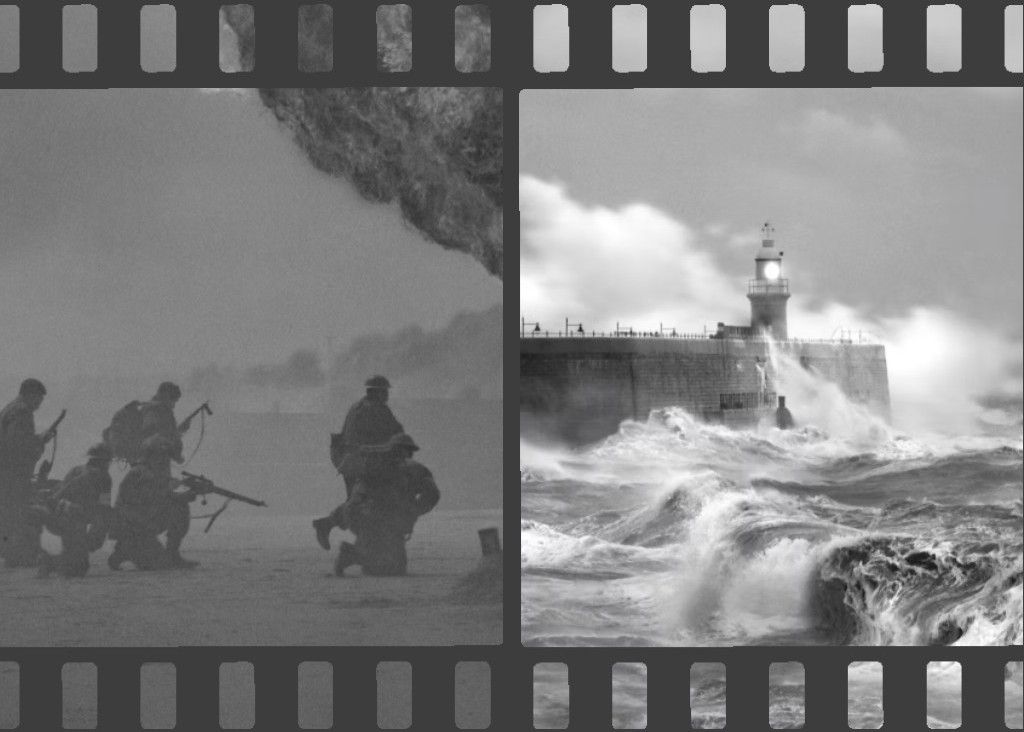
Those questions deserve thoughtful answers. Christians often distinguish between moral evil and natural evil.
Moral evil is suffering caused by human choices.
War.
Genocide.
Abuse.
Lying.
Racism.
Human trafficking.
Those exist because people misuse the freedom God has given them. But natural evil is different. It refers to suffering that isn’t directly caused by a person’s decision.
Disease.
Earthquakes.
Floods.
Famines.
Birth defects.
So why would a loving God allow those?
A Creation That Groans
Paul gives us an important glimpse in Romans 8.
“For the creation was subjected to futility… We know that the whole creation has been groaning together in the pains of childbirth until now.” (Romans 8:20-22).
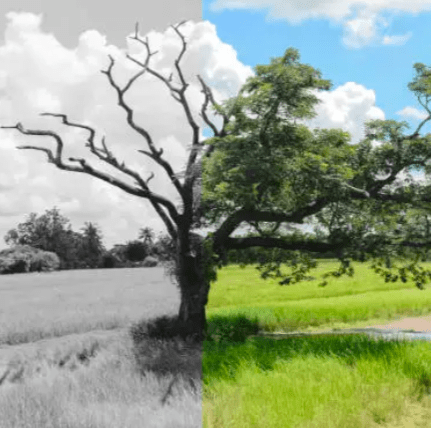
Notice something remarkable. Paul doesn’t just describe people as broken. He describes creation itself as broken.
The Fall didn’t only affect Adam and Eve. It affected the entire created order.
Exactly how that works has been understood differently by faithful Christians throughout history. Some believe the Fall introduced all death and natural suffering into creation. Others believe certain natural processes already existed but that humanity’s rebellion brought creation under frustration and decay in a unique way.
Whichever view one holds, Christians agree on this central truth:
The world today is not the fully restored world God intends it to be.
Why Doesn’t God Stop Every Tragedy?
This is perhaps the hardest question.
Why doesn’t God stop the drunk driver?
Why doesn’t He stop the bullet?
Why doesn’t He stop the cancer?
The honest answer is… Sometimes, we don’t know.
That may sound unsatisfying. But it’s also honest. The Bible never promises that we’ll understand every reason behind every tragedy.
In fact, one entire book of the Bible wrestles with this.
Job.
Job loses his children.
His wealth.
His health.
His friends misunderstand him.
For nearly forty chapters, Job asks “Why?”
When God finally answers, something surprising happens. He never tells Job why those specific tragedies occurred.
Instead, God reminds Job of something else.
There is an immeasurable difference between God’s wisdom and ours.
Job doesn’t receive every answer. He receives a greater vision of God.
Sometimes God’s greatest answer isn’t an explanation.
Sometimes it’s His presence.
Sometimes that’s one of the hardest truths for us to accept. Not because God lacks reasons. But because we are finite while He is infinite.

Does That Mean God Doesn’t Care?
Not at all. One of the most beautiful verses in the Bible is also one of the shortest.
“Jesus wept.” (John 11:35).
God is not emotionally detached from suffering. He enters into it.
Think about that.
Jesus already knew He was about to raise Lazarus from the dead. Yet He still stood beside grieving friends…and cried.
Why?
Because death is an enemy. Suffering grieves the heart of God. Sometimes people picture God watching the world from a distance, unaffected by our pain.
The Bible paints a different picture.
God entered His own creation. He experienced hunger. Fatigue. Rejection. Betrayal. Mocking. Torture.Death.
Christianity is unique in this way. God doesn’t merely observe suffering. He steps into it.
Could God Bring Good Out of Evil?
Be careful with this question.
It is not the same as saying evil is good.
The Bible never calls evil good.
Instead, it repeatedly shows that God is able to redeem what others intended for harm.
Joseph told the brothers who sold him into slavery, “You meant evil against me, but God meant it for good…” (Genesis 50:20).
Notice Joseph doesn’t deny their evil. He names it. It was evil.
Yet God was working through circumstances they couldn’t see.
The greatest example is the cross. Humanity rejected the sinless Son of God. That was the worst injustice ever committed. And yet through that injustice, God accomplished salvation for the world.
If God can redeem the cross… He can redeem our stories too.
That doesn’t mean we’ll always understand how. Or when. Sometimes we won’t see the good until eternity. Sometimes we may never understand this side of heaven.But Christianity rests on the conviction that evil never gets the final word.

“Everything Happens for a Reason.”
You may have heard Christians say that. Sometimes it’s spoken with good intentions. But if someone has just buried a child… Lost a spouse… Received a terminal diagnosis…
Those words can feel painfully hollow.
The Bible never tells grieving people to pretend their pain doesn’t matter. Instead it says,
“Weep with those who weep.” (Romans 12:15)
Sometimes the most Christlike thing we can do isn’t explain suffering. It’s sit beside someone in it.That’s exactly what Jesus often did.
We Live Between Two Gardens
The Bible begins in a garden. And it ends in a garden-like new creation.
In Genesis… There was no death.
In Revelation… Death is gone forever.
In Genesis… Humanity walked with God.
In Revelation… God dwells with His people again.
The story of Scripture isn’t simply about why suffering exists. It’s about what God is doing to end it.
We’re living between those two gardens.
Between creation…and restoration.
Between the Fall…and the day Christ makes all things new.
That’s why Christians have hope. Not because life is easy. But because suffering has an expiration date.
Before We Continue… If you’ve made it this far, thank you.
Whether you’re a believer, a skeptic, or someone who’s simply hurting, I hope you’ve seen that Christianity doesn’t ignore suffering. It begins with a good creation, acknowledges a broken world, and points us toward a Savior who stepped into our pain.
If you’re carrying deep wounds, I don’t expect one blog post to erase your questions. I don’t expect Bible verses to magically remove your grief.
But there is one final piece we haven’t talked about yet…

God Didn’t Stay Distant
Imagine someone trying to comfort you after the worst day of your life.
Now imagine they’ve never experienced loss. Never cried. Never buried someone they loved. Never been betrayed. Never been rejected.
Their words might be sincere… But they’d never truly understand.
Now think about Jesus.
He was misunderstood by His own family (Mark 3:21). He was betrayed by one of His closest friends (Matthew 26:47-50). Another disciple denied even knowing Him (Luke 22:54-62). His friends abandoned Him in His darkest hour (Matthew 26:56).
He was mocked.
Beaten.
Falsely accused.
Rejected.
Executed.
When we suffer, we’re not praying to a God who watches from a distance. We’re praying to a Savior who entered our suffering.
Hebrews tells us, “For we do not have a high priest who is unable to sympathize with our weaknesses…” (Hebrews 4:15).
Christianity doesn’t teach that God remained safely in heaven while humanity suffered. It teaches that God took on flesh. He stepped into our pain. That changes everything.
The Cross Wasn’t God’s Defeat
At first glance, the cross looks like evil won. The innocent man dies.The guilty go free. Darkness covers the land. Hope seems lost.
But three days later… The tomb is empty. The resurrection declares something profound.
Evil is real. But it isn’t ultimate.
Death is real. But it isn’t final.
Sin is powerful. But it isn’t undefeated.
The resurrection isn’t just a miracle Christians celebrate once a year. It’s the foundation of our hope. Because Jesus rose from the dead, Christians believe suffering will not have the last word.

Why Doesn’t God End Evil Today?
It’s a fair question.
If Jesus has already defeated sin and death, why do we still live in a broken world?
The New Testament describes believers as living in the “already, but not yet.”
Jesus has already won the decisive victory over sin through His death and resurrection. But the final restoration of creation has not yet come.
Think of World War II.
The Allied victory in Europe was declared on V-E Day, but fighting continued in some places until the war officially ended.
In a similar way, Christians believe Christ has secured the ultimate victory, but we still await the day when He returns to make all things new.
That day is coming.
Revelation paints a breathtaking picture.
“He will wipe away every tear from their eyes, and death shall be no more, neither shall there be mourning, nor crying, nor pain anymore…” (Revelation 21:4).
Notice what God doesn’t promise.
He doesn’t promise we’ll never cry. He promises He’ll wipe away every tear. That means He sees every one. Not a single tear escapes His notice.
But What If I’m Angry at God?
Can I tell you something?
God already knows.
He knows your disappointment. Your confusion. Your grief. Your questions.
Read the Psalms.
David cried, “How long, O Lord? Will you forget me forever?” (Psalm 13:1)
Habakkuk asked, “O Lord, how long shall I cry for help, and you will not hear?” (Habakkuk 1:2)
Jeremiah lamented. Job questioned.
These weren’t faithless people. They were hurting people. God preserved their words in Scripture.
Why?
Because He wanted future generations to know that bringing our pain to Him is an act of faith.
The opposite of faith isn’t asking God questions. It’s walking away without ever bringing those questions to Him.
If you’re angry… Tell Him.
If you’re confused… Tell Him.
If you’re heartbroken… Tell Him.
He already knows.

The Question Behind the Question
I’ve noticed something over the years.
When people ask, “Why does God allow suffering?” They usually aren’t asking for a philosophical explanation.
They’re asking something much deeper.
“Does God care about me?”
“Am I alone?”
‘Is there any hope?”
Christianity answers with an emphatic “Yes.”
God cared enough to come.
He cared enough to suffer.
He cared enough to die.
He cared enough to rise again.
And He cares enough to promise He isn’t finished yet.
My Takeaway
This question will probably never be easy. I don’t pretend to have an answer for every tragedy.
There are stories that break my heart. There are losses that leave me speechless. There are moments when the only honest response is tears.
But I don’t judge God’s character by the brokenness of this world. I judge His character by Jesus.
When I want to know what God is like, I don’t look first at natural disasters.
I look at a Savior who touched lepers.
Who welcomed children.
Who forgave sinners.
Who wept with grieving friends.
Who willingly went to the cross.
If Jesus is the perfect image of God (Colossians 1:15; Hebrews 1:3), then the cross becomes the clearest picture of God’s heart.
When I look at the cross, I see a God who loves sinners enough to rescue them. When I look at the empty tomb, I see a God powerful enough to defeat death itself. When I look at His promises, I see a future where suffering is not ignored but forever undone.
That doesn’t erase my questions. It gives me Someone to trust while I wait for the answers.
Questions to Reflect On
– If God truly entered human suffering through Jesus, how does that change the way you view Him?
– What kind of world do you hope for and how does that compare to the future the Bible describes?
– Have you been bringing your questions to God, or only thinking about them on your own?
– If Christianity is true, what difference would that make in the way you understand pain and hope?
If you’ve read this whole blog, thank you.
Maybe you’re still skeptical.
Maybe you still have questions.
That’s okay.
My goal was never to convince you with clever arguments.
My goal was to show you that Christianity doesn’t avoid the hardest questions. It acknowledges the reality of evil, points to the brokenness of our world, and ultimately points us to Jesus Christ, the One who entered our suffering so that one day He could end it forever.
If you have more questions, keep asking them. Just don’t stop seeking the truth.
As Jesus said, “You will seek me and find me, when you seek me with all your heart.” (Jeremiah 29:13)
~~*~~
Father,
Some questions don’t have easy answers. Sometimes life hurts in ways we never expected.
Thank You that You never ask us to pretend otherwise. Thank You for sending Jesus into our broken world. Thank You that He understands grief, rejection, betrayal, and pain.
Help us trust You when we cannot understand You. Help us remember that because of the cross and the empty tomb, suffering is not the end of the story.
For those reading this who are hurting, surround them with Your peace. For those who doubt, draw them closer to Yourself. For those who feel alone, remind them that You are near to the brokenhearted. And help each of us keep seeking You with honest hearts.
In Jesus’ name,
Amen.
Questions Worth Asking Series
Next Question: Does God Really Send People to Hell?
If God is loving, how can hell exist? We’ll explore that in the next blog. Come back next Saturday!
 Scriptural Musings with Booferchick