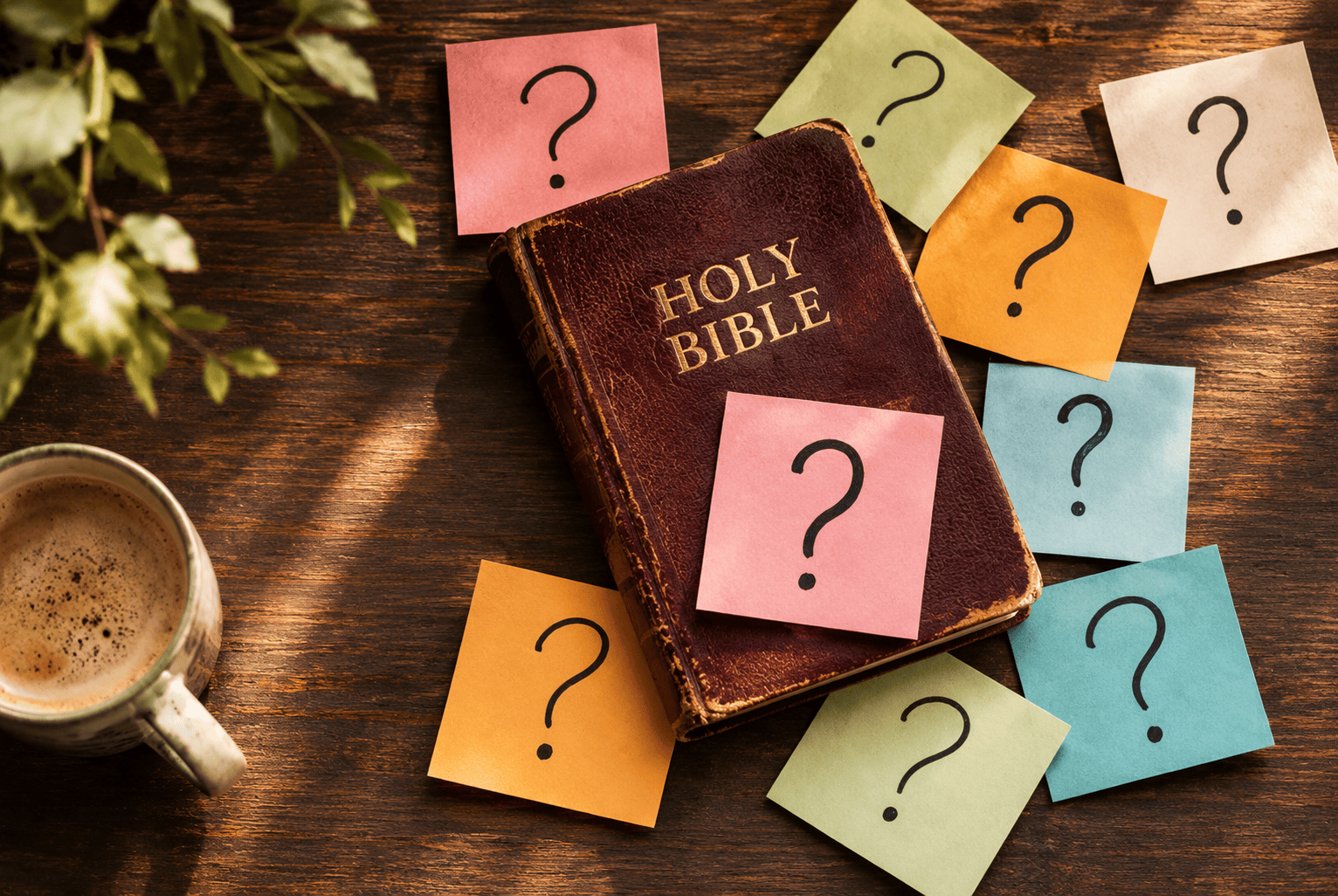
Have you ever read a passage of Scripture and noticed something that made you stop and think? That happened to me recently while reading Luke 1.
In this chapter, the angel Gabriel appears to two different people with two extraordinary announcements.
First, he tells Zechariah that his wife, Elizabeth, will bear a son despite their old age. Then, he tells Mary that she will conceive and give birth to Jesus, despite being a virgin.
Both announcements seem humanly impossible. Both Zechariah and Mary respond with a question.
Yet something caught my attention. Zechariah was silenced for his response, while Mary was blessed for hers.
Why?
Was Zechariah wrong for asking a question? Was Mary somehow more deserving of an explanation? Or was there something deeper happening?
Two Questions, Two Different Responses
When Gabriel announces that Elizabeth will bear a son, Zechariah responds:
“How shall I know this? For I am an old man, and my wife is advanced in years.” — Luke 1:18
Gabriel answers by declaring that Zechariah will be unable to speak until the promise is fulfilled. And he tells him why:
“Because you did not believe my words, which will be fulfilled in their time.” — Luke 1:20
Now consider Mary’s response when Gabriel announces that she will conceive Jesus.
“How will this be, since I am a virgin?” — Luke 1:34
Instead of rebuking her, Gabriel explains that the Holy Spirit will come upon her and the power of the Most High will overshadow her.
At first glance, their questions seem remarkably similar. Both recognize that what Gabriel is announcing is beyond human possibility.
But notice the difference in their wording. Zechariah asks, “How shall I know this?” Mary asks, “How will this be?”
Zechariah’s question appears to seek assurance that the promise is true. Mary’s question appears to seek understanding of how it will happen.
But we should be careful not to assume we know everything happening in their hearts simply from their wording. Thankfully, Scripture gives us something more.

The Difference Was Belief
Later in the chapter, Elizabeth says something beautiful to Mary:
“And blessed is she who believed that there would be a fulfillment of what was spoken to her from the Lord.” — Luke 1:45
There it is. Gabriel tells Zechariah that he did not believe. Elizabeth declares that Mary did believe.
The difference wasn’t simply that they asked questions. It was how they responded to God’s word. And this made me think about my own relationship with God.
How often do I approach Him with questions? How often do I struggle to understand what He’s doing? And how often does my desire to understand become a demand for certainty before I’m willing to trust Him?
Because those aren’t necessarily the same thing.
There is a difference between saying, “Lord, I don’t understand how You’re going to do this, but I trust You,” and saying, “Lord, how can I believe You unless You prove it to me?”
One seeks understanding while remaining open to trust. The other risks making understanding a condition of trust.
God Is Not Threatened by Our Questions
I think this is important to remember. Having questions doesn’t automatically mean we lack faith. Throughout Scripture, we encounter faithful people who bring their confusion, sorrow, and uncertainty before God.
David cried out to Him in the Psalms. Habakkuk questioned why God allowed wickedness and injustice. Job wrestled with suffering he couldn’t understand.
God doesn’t require us to pretend that everything makes sense. He invites us to seek Him.
But there is a difference between humbly seeking understanding and refusing to trust what God has revealed. And sometimes, if we’re willing to examine our hearts, we might discover that our questions aren’t really about understanding. Sometimes they’re about control.
We want to know how everything will work out before we surrender. We want guarantees before we obey. We want God to explain His plans before we trust His character.
Yet faith doesn’t always come with an explanation. Sometimes it comes with a promise. And a choice to trust the One who made it.

Even Zechariah’s Unbelief Didn’t Stop God’s Faithfulness
There’s something else about this passage that I find beautiful.
Zechariah struggled to believe. And yes, he experienced a consequence for his unbelief. But God didn’t abandon him.
God didn’t withdraw His promise. Elizabeth still conceived..John the Baptist was still born. And when Zechariah’s voice was finally restored, Scripture tells us that he began praising God (Luke 1:64).
Later, he prophesied about God’s faithfulness and the salvation He was bringing to His people.
Think about that.
The man who initially struggled to believe God’s promise eventually proclaimed God’s faithfulness. Zechariah’s unbelief did not make God unfaithful.
What a beautiful reminder that God’s purposes are not dependent upon our perfect understanding.
That doesn’t mean unbelief is something we should dismiss or excuse. But it does remind us that God is merciful, patient, and faithful even when we struggle.
Faith Doesn’t Require All the Answers
Mary didn’t know everything that awaited her. She didn’t know every hardship she would face as the mother of Jesus. She didn’t know how others would respond to her pregnancy or what the years ahead would hold.
But she knew who had spoken. And her response was:
“Behold, I am the servant of the Lord; let it be to me according to your word.” — Luke 1:38
What a beautiful picture of surrender. Not because Mary understood everything. But because she believed God.
And that’s what I want to take away from this passage.
I don’t have to understand everything God is doing. I don’t have to have every question answered. I can bring my confusion to Him honestly, search His Word diligently, and trust His character even when His ways are beyond my understanding. Because faith isn’t the absence of questions. It’s trusting God despite them.
And perhaps the question we should ask ourselves isn’t simply, “Do I have doubts?”
But rather:
“When I don’t understand, will I still trust Him?”
~~*~~
Heavenly Father,
Thank You for being patient with us when we struggle to understand. Thank You that we can come before You with our questions, our uncertainties, and even our doubts.
Lord, help us examine our hearts. Teach us to recognize when we’re genuinely seeking understanding and when we’re allowing unbelief to take root.
Give us faith like Mary’s, willing to trust Your Word even without knowing how everything will unfold.
And when we struggle like Zechariah, remind us of Your mercy and faithfulness.
Help us remember that Your promises do not depend on our ability to understand them, but on Your unchanging character.
May we learn to trust You not only when Your plans make sense, but also when they don’t.
In Jesus’ name, Amen.

