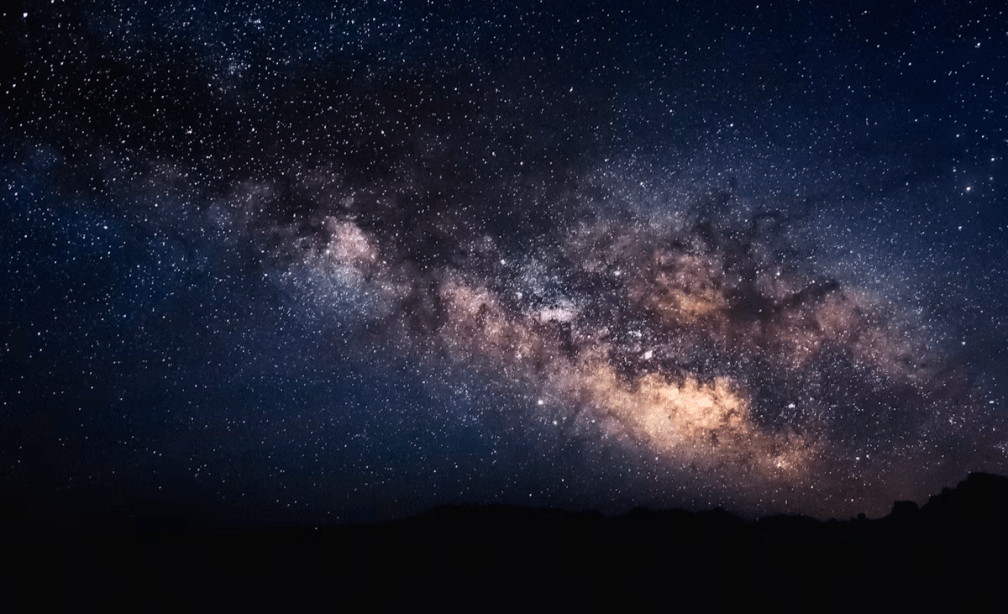
Did Science Disprove God?
“We have science now. Why do we still need God?”
It’s a question I’ve heard in different forms countless times..Maybe you’ve heard someone say:
“Religion was how ancient people explained things they didn’t understand.”
“People used to think lightning came from the gods. Now we know how weather works.”
“Science explains the universe. There’s no need for a Creator anymore.”
And perhaps the most familiar:
“I believe in science, not God.”
At first, that sounds like a choice we have to make. Science… or faith. Evidence… or religion. Reason… or God.
But is that actually true? Has science really disproved God? Or have we confused two different kinds of questions? That’s worth investigating.
First… What Is Science?
Before asking whether science disproves God, we should understand what science actually does.
Science is extraordinarily powerful. Through observation, experimentation, measurement, and testing, we’ve learned things previous generations could hardly have imagined.
We’ve discovered galaxies billions of light-years away. We’ve mapped the human genome. We’ve developed medicines that save millions of lives. We’ve learned about atoms, gravity, DNA, black holes, evolution, and the history of our universe.
Christians shouldn’t be afraid of any of that. If God created the natural world, studying that world shouldn’t threaten faith. It should tell us more about the creation we’re claiming He made.
But science has a particular job. It investigates the natural world and seeks natural explanations for what we observe. That makes science incredibly good at answering certain questions.
How does this happen? What is this made of? What physical processes caused this? What predictions can we test?
But there are other questions science, by its methods alone, aren’t designed to settle.
Why does anything exist at all? Why should we value human life? What makes something morally right or wrong? Does my life have ultimate meaning? Does God exist?
Those aren’t necessarily anti-scientific questions. They’re philosophical, moral, and theological questions. Science is one extraordinarily powerful way of investigating reality.
But that doesn’t mean it’s the only kind of question human beings can reasonably ask.
“God Did It” Isn’t a Scientific Explanation
This distinction matters for Christians too. Suppose scientists are investigating why a disease occurs. A Christian can’t simply respond, “God made the universe, so God did it. Investigation over.” That doesn’t tell us anything about the biological mechanism involved.
Likewise, saying God created lightning doesn’t mean we shouldn’t study electricity, atmospheric conditions, and weather. Understanding how something happens doesn’t automatically answer the question of whether there is ultimately a Creator behind the system.
This is where Christians should avoid something sometimes called the “God of the gaps.”
The argument goes something like this:
“Science can’t explain X.”
“Therefore, God must have done X.”
There’s a problem with that. What happens when science eventually explains X? God gets pushed into a smaller gap.
Christian belief shouldn’t depend upon finding something scientists haven’t figured out yet.
The National Academies makes essentially the same caution: both science and religion are poorly served when unexplained natural phenomena are automatically assigned to supernatural intervention.
The Christian claim is much bigger. God isn’t merely an explanation for the things science can’t explain. Christians believe God is the reason there is a universe for science to investigate in the first place.

Does Explaining Something Remove God?
Imagine someone asks, “Why is the water boiling?”
One person answers:
“Because heat is increasing the kinetic energy of the water molecules until the water reaches its boiling point.”
Another answers:
“Because I’m making pasta.”
Which answer is correct? Both.
They’re answering different questions. One explains the mechanism. The other explains the purpose and agency behind what is happening.
Understanding the mechanism doesn’t suddenly prove there isn’t a cook. In the same way, discovering natural mechanisms doesn’t automatically tell us whether God exists.
Christians don’t have to choose between: “Gravity holds planets in orbit.” and “God created a universe governed by consistent physical laws.”
Those statements aren’t necessarily competitors. One describes how nature behaves. The other makes a claim about why nature exists at all.
But What About the Big Bang?
This is where things get interesting. Sometimes people imagine the Big Bang as the scientific alternative to creation.
Either… God created the universe or… the Big Bang happened. But those statements aren’t actually opposites.
The Big Bang model describes the early development and expansion of our universe. Current cosmology places the universe at about 13.8 billion years old, developing from an extremely hot, dense early state. Evidence such as cosmic expansion and the cosmic microwave background supports this picture. Scientists are still investigating fundamental questions about the universe’s earliest moments.
The Big Bang doesn’t mean, “Science proved the universe came from nothing without God.” That’s not what the scientific model says.
In fact, NASA itself notes that scientists still don’t know what preceded cosmic inflation or what powered it.
Science can investigate the universe’s earliest physical history. But the philosophical question remains: Why is there a universe at all?
“In the Beginning…”
The Bible opens with one of the most famous sentences ever written:
“In the beginning, God created the heavens and the earth.” (Genesis 1:1)
Notice what Genesis isn’t trying to give us. A modern physics textbook.
It doesn’t explain quantum mechanics. It doesn’t calculate the expansion rate of the universe. It doesn’t give us equations describing gravity.
Its opening declaration answers a more foundational question: Who is ultimately responsible for everything that exists?
God.
Whatever conclusions Christians reach about the age of the universe or exactly how the events of Genesis 1 relate to scientific descriptions of cosmic history, Christianity makes a foundational claim:
The universe isn’t self-existent. Creation is not God. God is the Creator of it.
“For by him all things were created, in heaven and on earth…” (Colossians 1:16)
Science investigates creation. Christianity makes a claim about its Creator. Those aren’t automatically contradictory.
Wait… What About Genesis?
😂 Yep. We have to go there. Because someone reading this is already thinking:
“Okay, but doesn’t Genesis say God created everything in six days?” And then comes the bigger one: “What about evolution?” These questions are where Christians themselves disagree.
Some Christians understand the six days of Genesis 1 as six ordinary twenty-four-hour days and believe the earth is relatively young. Others understand the days differently and believe Scripture allows for an ancient universe and earth. Still others believe God created life through evolutionary processes while maintaining the theological claims Genesis makes about God, creation, humanity, and sin.
Those aren’t tiny disagreements. And I’m not going to pretend they don’t exist. But there’s something important to understand:
Christians can disagree about how Genesis relates to scientific chronology without disagreeing about who created the universe.
Genesis doesn’t begin: “In the beginning, chance…” It begins: “In the beginning, God.”
That’s the claim Christianity cannot surrender.
We Shouldn’t Be Afraid of Truth
This is where I think Christians sometimes make a mistake.
We can become so afraid that a scientific discovery might threaten our interpretation of Scripture that we become suspicious of science itself.
But if Christianity is true… Truth can’t ultimately contradict truth. If God created the universe and God inspired Scripture, then properly understood creation and properly understood Scripture ultimately come from the same Author.
That doesn’t mean we’ll always interpret either one correctly. Scientists can be wrong. Christians can interpret Scripture incorrectly. Scientific models can change as new evidence emerges. And Christians sometimes bring assumptions to biblical passages that the text itself doesn’t require.
So humility matters on both sides. We shouldn’t distort Scripture to accommodate every new scientific idea. But neither should we distort scientific evidence because we’re afraid of where it might lead.
We follow truth wherever it goes. Because Christians believe all truth ultimately belongs to God.
So has science disproved God? Not simply by explaining how natural processes work.
Understanding gravity doesn’t eliminate a Creator. Understanding genetics doesn’t eliminate a Creator. And describing the early expansion of the universe doesn’t, by itself, answer why a universe exists in the first place.
But we’ve avoided the elephant in the room long enough.
Evolution.
If humans evolved from earlier forms of life… what happens to Genesis? What about Adam and Eve? What does it mean to say humans were created in God’s image?
And can a Christian genuinely accept modern science without compromising Scripture? Those questions deserve more than a throwaway paragraph.
So that’s where we’re going next. 🔥

Okay… Let’s Talk About Evolution
There it is. The word that has probably caused more arguments between Christians and science classrooms than almost anything else.
Evolution.
For some Christians, the word immediately raises alarm bells.
“Doesn’t evolution contradict Genesis?”
“If humans evolved, what happens to Adam and Eve?”
“If animals were dying for millions of years, how could death have entered through sin?”
And from the other side, skeptics sometimes argue:
“Evolution explains life without God. Therefore, we don’t need a Creator.”
There’s a lot packed into those statements.
So before we go any further, we need to separate two questions that are often blended together.
Did biological evolution occur?
And…
Does biological evolution mean God doesn’t exist?
Those aren’t the same question.
What Is Evolution?
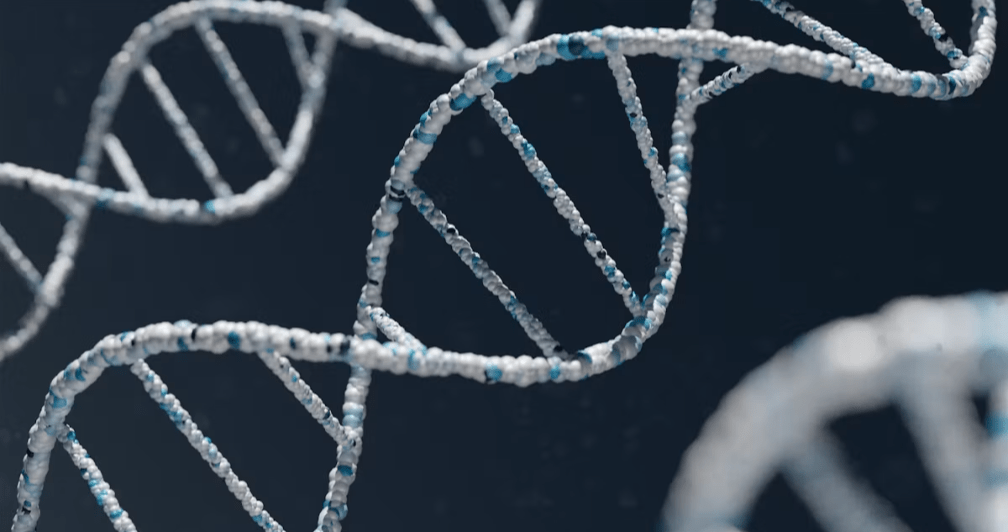
Let’s begin with the science itself. Evolution, broadly speaking, refers to changes in populations of living organisms across generations. Those changes occur through mechanisms including mutation, natural selection, genetic drift, and gene flow.
Over very long periods of time, these processes can contribute to populations diverging and new species arising. Modern evolutionary biology also holds that living organisms share common ancestry, with evidence coming from multiple fields including genetics, fossils, comparative anatomy, and embryology. Evolution is foundational to modern biology and is supported by extensive scientific evidence.
That doesn’t mean scientists know every detail of life’s history. Science rarely works that way. There are ongoing debates about particular evolutionary pathways, rates of change, ancient environments, and details of specific lineages.
But disagreement over details shouldn’t be confused with scientists having no evidence for evolution at all. They do. And Christians shouldn’t misrepresent that evidence simply because we’re concerned about its theological implications.
Truth doesn’t need us to protect it by pretending evidence doesn’t exist.
But Doesn’t Evolution Remove the Need for God?
Not necessarily. Evolution is a proposed explanation for how biological diversity developed. It isn’t, by itself, an explanation for why anything exists.
Evolution doesn’t tell us why there is a universe. It doesn’t explain why there are physical laws capable of supporting life. It doesn’t tell us why matter exists.
And biological evolution isn’t itself a theory explaining the ultimate origin of the universe. Even the origin of the first life and the subsequent evolution of life are different scientific questions. That’s an important distinction.
Suppose God created a universe in which living things could develop through natural processes. Discovering those processes wouldn’t disprove God any more than understanding embryology disproves God because we understand how a baby develops in the womb.
The scientific question would be:
What process occurred?
The theological question would remain:
Is there a Creator ultimately responsible for the existence of that process and the universe in which it operates?
You can reject God and accept evolution. You can also believe in God and accept evolution.
In fact, many religious people and scientists do exactly that. The National Academies explicitly notes that acceptance of biological evolution can be compatible with religious faith.
But… Now we have to ask the harder question.
Does Evolution Contradict Genesis?
This is where I’m going to resist giving you a neat little answer. Because Christians disagree. And they don’t merely disagree because one group “believes the Bible” while the other doesn’t.
Christians who affirm the authority of Scripture have reached different conclusions about how Genesis should be interpreted. Broadly speaking, you’ll encounter several positions.
Young-earth creationists generally understand the creation days of Genesis 1 as ordinary days and believe God created the major forms of life directly within a recent creation.
Old-earth creationists accept the scientific evidence for an ancient earth and universe while believing God specially created life at various points in history rather than all biological diversity arising through common descent.
Evolutionary creationists, sometimes called theistic evolutionists, accept common ancestry and biological evolution while believing that the entire process exists under God’s sovereignty and creative will.
And there are variations within all three. These Christians can read the same Genesis 1 and disagree about precisely how God created while agreeing completely about the most important statement Genesis makes:
“In the beginning, God created the heavens and the earth.” (Genesis 1:1)
That’s why I don’t think Christians should treat every disagreement about the mechanics or timeline of creation as though it were a disagreement about whether God is Creator. Those aren’t necessarily the same thing.

What Are the “Days” in Genesis?
Genesis repeatedly says: “And there was evening and there was morning…” followed by the first day, second day, and so on.
Some Christians understandably conclude that the most natural reading is six ordinary days. Others point out that the Hebrew word translated day, yom, can be used in different ways depending upon context and believe Genesis may be communicating something other than a modern scientific chronology.
Others emphasize the literary structure and ancient context of Genesis, arguing that the chapter’s primary concern is identifying who created, the order and purpose God gives creation, and humanity’s place within it.
I’m not going to pretend this blog can settle a debate Christians have written entire books about. 😂 But here’s something I think matters:
Genesis was written long before anyone was debating Darwin, genetics, or the age of the universe.
We should be careful not to force Genesis to answer twenty-first-century scientific questions its original audience wasn’t asking.
That doesn’t make Genesis less true. It means we should ask what kind of truth the text itself intends to communicate.
Genesis tells us that creation isn’t divine. The sun isn’t a god. The moon isn’t a god. Animals aren’t gods. Human beings aren’t accidents without purpose.
Everything owes its existence to the one true God. And humanity has a unique place within His creation. Which brings us to an even harder question.
What About Adam and Eve?
If human beings share biological ancestry with earlier forms of life, what do we do with Adam and Eve?
Genesis doesn’t simply mention humanity generally. It gives us Adam. It gives us Eve. And the New Testament refers to Adam too.
Paul draws important theological connections between Adam and Jesus: “For as in Adam all die, so also in Christ shall all be made alive.” (1 Corinthians 15:22)
So Christians can’t simply shrug and say Adam doesn’t matter. He clearly matters to biblical theology.
But Christians who accept evolutionary science don’t all understand Adam and Eve in exactly the same way. Some believe Adam and Eve were specially created by God and reject human common ancestry. Some accept an ancient earth but still affirm a specially created historical Adam and Eve. Some Christians who accept evolution believe Adam and Eve were historical individuals whom God selected or appointed from a larger human population for a unique covenant relationship. Others understand Adam as representing humanity in a theological or archetypal sense.
There are serious theological questions surrounding each position, particularly when we reach Paul’s teaching about Adam, sin, and Christ. Even evangelical Christians who agree on the inspiration and authority of Scripture have disagreed over how best to reconcile Adam with human origins.
I don’t think we serve anyone by pretending otherwise.

Were Humans “Just Animals,” Then?
Here’s another common concern. If humans share biological ancestry with other creatures, doesn’t that make us nothing more than animals? Not according to Christianity.
Genesis says: “Then God said, ‘Let us make man in our image, after our likeness.'” (Genesis 1:26)
Whatever biological process God may or may not have used to bring about the human body, Christianity teaches something about humanity that biology alone cannot determine.
Human beings bear the image of God. Christians have debated exactly everything imago Dei includes. Our rational capacities. Our moral awareness. Our ability to relate to God. Our calling to represent God’s rule within creation. Perhaps some combination of these.
But the central point remains: Human value isn’t based upon how our bodies were formed. It’s grounded in the God whose image we bear.
You aren’t valuable because you’re biologically unrelated to other creatures. You’re valuable because God says human beings uniquely bear His image.
That truth has enormous implications for human dignity, morality, justice, and the value of every human life.
But What About Death Before the Fall?
Now we’ve reached one of the genuinely difficult issues.
Romans says: “Therefore, just as sin came into the world through one man, and death through sin…” (Romans 5:12)
If animals lived and died for millions of years before human beings appeared… how could death have entered through Adam’s sin?
Young-earth creationists often understand passages like this to mean that biological death, including animal death, entered creation after humanity’s Fall.
Other Christians understand Paul as speaking specifically about human death resulting from human sin. Still others emphasize the spiritual death and separation from God brought about by sin.
Old-earth creationists and evolutionary creationists therefore may affirm animal death before the Fall while maintaining that Adam’s sin brought death and condemnation to humanity. This question remains an important point of disagreement among Christians trying to interpret both Scripture and the history recorded in nature.
And I think this is one of those places where humility matters. We shouldn’t pretend Scripture says less than it does. But we also shouldn’t claim it says more than it does simply because that makes our preferred model easier to defend.

“But God Said Creation Was Very Good”
Genesis 1:31 says: “And God saw everything that he had made, and behold, it was very good.”
So how could there have been predation, extinction, disease, or animal death before human sin? That’s a serious theological question.
Some Christians say there couldn’t have been. Others point out that “very good” doesn’t necessarily mean creation had already reached its final, perfected state.
After all, Genesis itself gives humanity work to do. They’re told to: “…fill the earth and subdue it…” (Genesis 1:28)
And Scripture’s final picture of creation isn’t simply a return to Genesis 1. It’s a new creation where death is finally abolished: “Death shall be no more…” (Revelation 21:4)
Some Christians therefore distinguish between creation being genuinely good in Genesis and creation reaching its ultimate perfected state in Revelation.
Again, Christians disagree. And that’s okay to acknowledge.
Science Can Tell Us About Processes. It Can’t Tell Us Our Worth.
This may be one of the most important distinctions in this entire discussion. Suppose evolutionary biology eventually gave us an incredibly detailed account of human biological history.
It could potentially tell us where our ancestors lived. What pressures shaped populations. What genetic changes occurred. How different hominin groups were related.
But science couldn’t put humanity under a microscope and discover: “Human beings have inherent moral worth.”
That’s not a biological measurement. Science can describe what human beings are physically.
It can study our brains.
Our genes.
Our ancestry.
Our behavior.
But questions about ultimate human value, moral obligation, purpose, and whether humans bear God’s image aren’t questions a DNA sequencer can answer.
That’s not an insult to science. It’s simply recognizing what scientific methods are designed to investigate.
Christians Don’t Need to Fear a Fossil
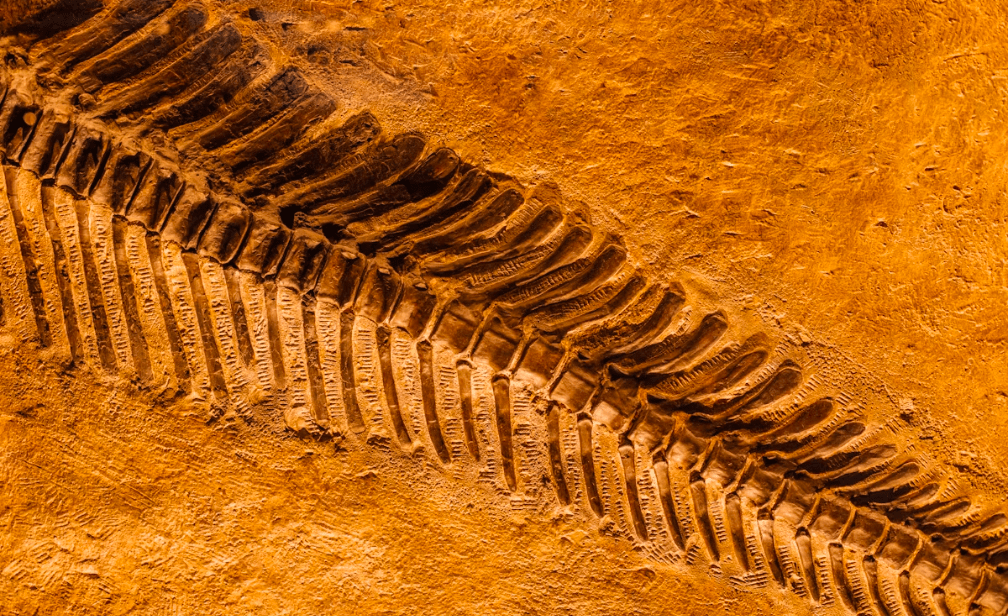
I think sometimes we approach these conversations backward. A fossil is discovered. A new hominin species is identified. A genetic connection is uncovered. And immediately we think: “Oh no. What does this do to Christianity?”
But if God really created the natural world… then whatever actually happened in the history of that world is His history.
We don’t need to be afraid of discovering it. That doesn’t mean accepting every scientific claim uncritically.
Science involves evidence, interpretation, debate, correction, and continued discovery.
But Christians shouldn’t begin with: “What evidence am I allowed to accept without threatening my faith?”
We should begin with: “What is true?” And then do the hard work of understanding both nature and Scripture correctly.
Because if God is the Author of both… They aren’t ultimately enemies.
Before We Continue…
So evolution doesn’t automatically disprove God. It does raise serious questions about how Christians interpret Genesis, Adam and Eve, the Fall, and death.
Those questions shouldn’t be dismissed. And Christians may reach different conclusions while remaining committed to Christ and Scripture.
But now I want to turn the question around.
We’ve spent a lot of time asking: “Does science create problems for belief in God?”
What happens when we ask whether the universe itself contains features that are surprisingly compatible with belief in a Creator?
Why does the universe obey mathematical laws? Why are the fundamental conditions of the cosmos capable of supporting life?Why is there something rather than nothing? And does the apparent fine-tuning of the universe actually point toward God?
That’s where this gets REALLY fun. 🔬🌌🔥
We’re going cosmic. 😏
If you’ve made it this far, thank you. We’ve talked about the Big Bang. Evolution. Genesis. Adam and Eve. The age of the universe. And some of the genuine disagreements Christians have about how Scripture and scientific discoveries fit together.
But now I want to turn the question around. We’ve spent this entire blog asking: Has science given us reasons not to believe in God? What happens if we ask something different? Is there anything about the universe that actually makes belief in a Creator reasonable?
Because the deeper scientists look into our universe, the stranger and more extraordinary it becomes. And one of the most fascinating examples is something called… Fine-tuning.

A Universe Capable of Life
Our universe operates according to physical laws and fundamental constants.
Gravity.
Electromagnetism.
The strong nuclear force.
The masses of fundamental particles.
The properties of matter and energy.
And here’s where things get interesting. The existence of complex structures, including galaxies, stars, planets, chemistry, and eventually life, depends sensitively on features of those laws and constants.
Change certain features substantially and you don’t simply get a slightly different universe. You may get a universe without stable stars. Without complex chemistry. Without the structures necessary for life as we know it.
This is what scientists and philosophers mean when they talk about the fine-tuning of the universe for life. It doesn’t mean science has discovered a label saying “Designed by God.” It means that life depends delicately upon certain fundamental characteristics of our universe.
And that raises an obvious question.
Why?
Why does our universe have conditions capable of producing complex life at all?
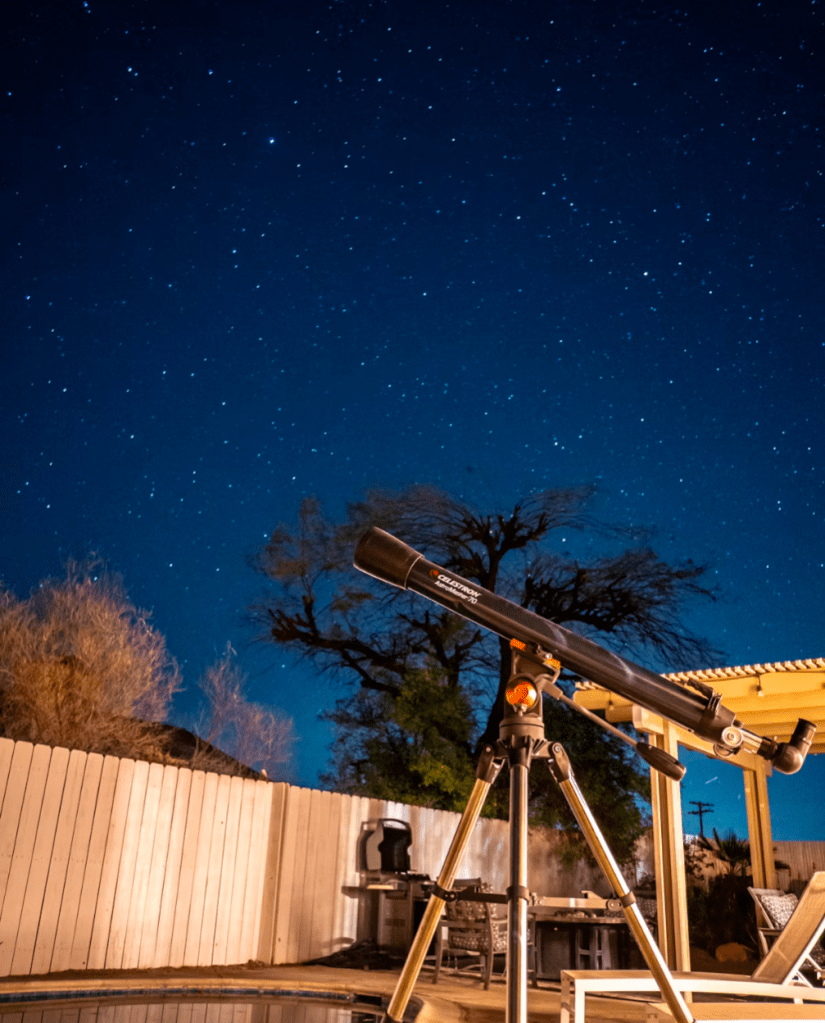
Does Fine-Tuning Prove God?
No.
And I think Christians should be honest about that. Fine-tuning is not a scientific experiment where scientists enter God’s existence into an equation and receive:
ANSWER: GOD.
There are different proposed explanations for why we observe a life-permitting universe. Perhaps the constants couldn’t ultimately have been different. Perhaps future physics will uncover some deeper necessity behind them. Perhaps there are enormous numbers of universes with different conditions, and naturally we find ourselves in one capable of supporting observers. Perhaps the conditions are simply a brute fact. Or perhaps the universe was intentionally designed.
Scientists and philosophers continue debating these possibilities, and even assigning meaningful probabilities to possible values of the constants is philosophically complicated.
So I’m not going to tell you: “Fine-tuning scientifically proves Christianity.” It doesn’t.
But neither does science tell us: “Fine-tuning proves there is no Creator.” It doesn’t do that either.
Instead, fine-tuning gives us something worth thinking about. If a universe capable of complex life requires particular underlying conditions… Why does such a universe exist?
For Christians, design is not an unreasonable answer.
“The heavens declare the glory of God, and the sky above proclaims his handiwork.” (Psalm 19:1)
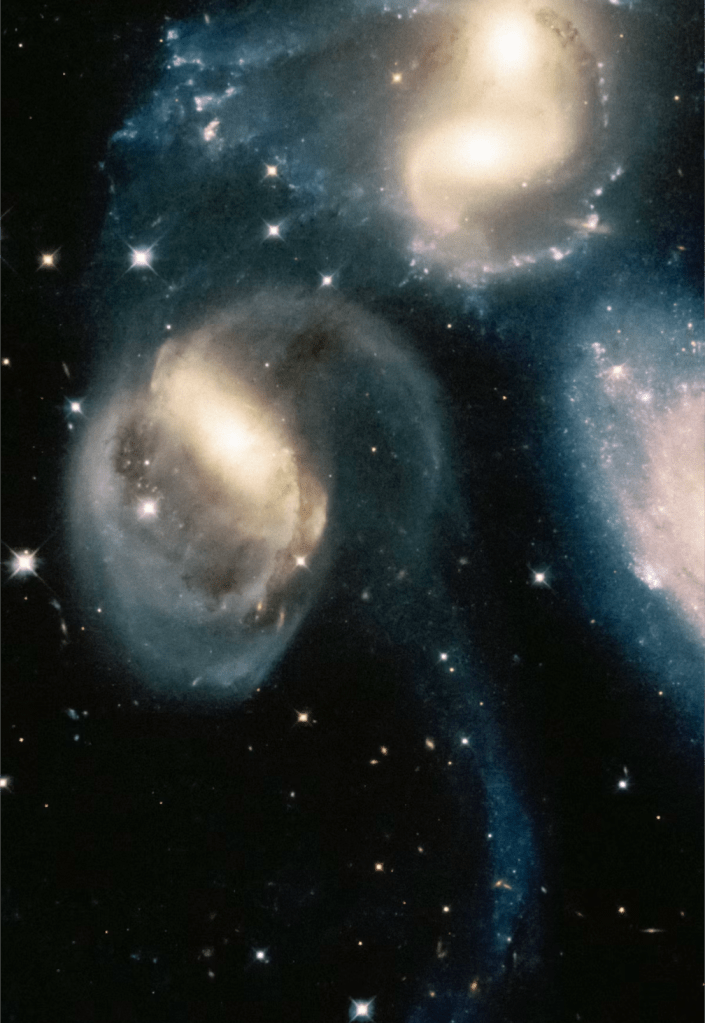
But What About the Multiverse?
Maybe you’ve heard this response. “What if there are countless universes?”
If an enormous number of universes exist with different physical conditions, perhaps it isn’t surprising that at least one happens to support life. And naturally… We’d find ourselves in that one.
That’s a serious idea discussed in modern cosmology and philosophy. It shouldn’t be mocked as though scientists invented it simply because they were desperate to avoid God.
But here’s something important. Even if some form of multiverse exists… that wouldn’t disprove God either.
It would change the scientific picture of the cosmos. But the theological question would simply become larger.
Why does a multiverse exist? Why does whatever mechanism produces universes exist? Why are there laws governing that mechanism? Why is there something rather than nothing?
A multiverse and God aren’t logically mutually exclusive. Christians don’t believe God is merely the Creator of this particular collection of galaxies. We believe He is the reason anything exists at all.
“All things were made through him, and without him was not any thing made that was made.” (John 1:3)
Whether creation contains one universe or countless universes wouldn’t change that claim.
Why Is There Something Rather Than Nothing?
Now we’ve reached one of my favorite questions.
Look around you. Something exists. You exist. The earth exists. Stars exist. Matter exists. Space exists. Time exists. The universe exists.
Why?
Science can investigate earlier and earlier stages of cosmic history. It can describe physical conditions. It can construct models. It can test predictions.
But eventually we encounter a philosophical question: Why is there anything to investigate in the first place? Why does reality exist rather than absolutely nothing?
Philosophers have wrestled with that question for centuries. Arguments that reason from the existence or contingency of the universe toward some ultimate explanation are generally called cosmological arguments. There are several versions, and philosophers continue debating their strengths and weaknesses today.
Christianity gives a remarkably simple answer.
“In the beginning, God created the heavens and the earth.” (Genesis 1:1)
That verse isn’t attempting to explain every physical process involved in cosmic history. It’s answering something deeper.
Why is there a universe? Because ultimately…
There is a Creator.
“Okay… Then Who Created God?”
There it is. 😂
You knew we were going to get here. If everything needs a creator, then surely God needs one too.
But Christianity doesn’t actually claim everything has a cause. The claim is that God is not the same kind of thing as the universe.
Everything we encounter within the universe appears dependent upon other things.
Stars form from matter.
People come from parents.
Buildings require builders.
Events have explanations.
Christian theology describes God differently. God is eternal. He doesn’t begin to exist. He isn’t one more object sitting somewhere inside the universe. He is the Creator upon whom creation depends.
Scripture describes Him: “From everlasting to everlasting you are God.” (Psalm 90:2)
So asking, “Who created God?” misunderstands what Christians mean by God.
If something created God… Then whatever created Him would be more fundamental than God. And that would be what we’re trying to identify.
The Christian claim is that ultimately reality terminates not in an endless chain of dependent things… but in One who exists eternally and depends upon nothing outside Himself.
Now, someone can certainly reject that argument. But asking who created an eternal, uncreated God doesn’t refute the Christian concept.
It changes the definition.
Why Can We Understand the Universe?
There’s another thing about science that I find fascinating.
Science works. Think about how strange that is.
Human beings are tiny creatures living on a small planet orbiting one star among an unimaginable number of stars. And somehow… we can understand pieces of the universe. We can describe planetary motion mathematically. We can discover physical laws. We can predict eclipses. We can understand the structure of DNA. We can calculate where a spacecraft needs to travel before launching it.
Our minds are capable of discovering patterns in reality because reality behaves with remarkable regularity. Science depends upon that regularity. Scientists test ideas precisely because they expect nature to behave consistently enough for experiments and observations to mean something. That doesn’t prove God.
But Christianity gives us an interesting reason not to be surprised by an intelligible universe. Christians believe creation came from an intelligent God. And human beings were made in His image.
“So God created man in his own image…” (Genesis 1:27)
A rational creation investigated by rational creatures isn’t strange within the Christian worldview. It’s exactly the kind of world we might expect.
Science Changes. Is That a Weakness?
Sometimes Christians say: “Scientists are always changing their minds.” Usually as though that’s an argument against science. But honestly? That’s one of science’s strengths.
Scientific knowledge develops because scientists test ideas against evidence. A hypothesis can be challenged. Experiments can be repeated. Models can be revised. New evidence can force old explanations to change.
Scientists aren’t infallible, and science doesn’t promise absolute certainty about every conclusion. Confidence grows when findings survive continued testing and scrutiny.
That’s not something Christians need to fear. In fact, there’s a lesson for us there too. Humility.
Christians can confuse our interpretation of Scripture with Scripture itself. Scientists can confuse current scientific models with final knowledge.
Both of us are human.
Both of us can be wrong.
So we keep studying.
We keep asking.
We keep testing our assumptions.
Truth has nothing to fear from investigation.
What Science Cannot Tell Us
Imagine science eventually answered every physical question we currently have. Imagine we understood every particle. Every force. Every biological mechanism. Every process involved in consciousness. Every moment of cosmic history.
We could still ask: Why does anything exist? What should I do with my life? Is murder objectively wrong? Does human life have intrinsic value? Is there a purpose to existence? Does God exist?
Those aren’t failures of science. They’re simply different kinds of questions.
A microscope is incredible. But you shouldn’t criticize it because it can’t tell you whether murder is wrong. That’s not what microscopes are for.
Scientific methods are designed to investigate the natural world through empirical evidence. Questions of ultimate meaning, ethics, and theology can extend beyond what those methods alone can settle.
Recognizing the limits of science isn’t being anti-science. It’s understanding science correctly.

So… Did Science Disprove God?
No.
Science has challenged certain interpretations Christians have held. It has corrected bad ideas about the natural world. It has forced Christians to examine how we interpret certain biblical passages. And frankly… that’s not necessarily a bad thing.
If something I believe about creation is wrong, I want to know. But science hasn’t discovered: “God does not exist.”
In fact, the National Academies puts the distinction plainly: science, as science, cannot prove or disprove religion, and questions involving supernatural realities aren’t directly testable through scientific methods.
Science can tell us astonishing things about creation. Christianity asks us to consider whether there is a Creator. Those questions can interact. But they aren’t identical.
The Question Behind the Question
When someone says, “I believe in science, not God,” maybe the real question isn’t: Science or God?
Maybe it’s: What kind of explanation am I looking for?
If I want to know how stars form… Ask astronomy. If I want to understand inheritance… Ask genetics. If I want to understand disease… Ask medicine. If I want to understand chemical reactions… Ask chemistry.
But if I ask: Why does anything exist? Why am I here? What gives human beings value? Is there a God behind all of this?
I’ve stepped into questions science alone isn’t equipped to answer. And that’s okay. I don’t have to choose between loving science and loving God.
I can look through a telescope… and worship. I can study DNA… and marvel. I can learn about evolution… and ask difficult questions about Genesis. I can discover something new about creation… without becoming afraid of what it might do to my faith.
Because if God is really the Creator… every true thing we discover was already His truth before we discovered it.
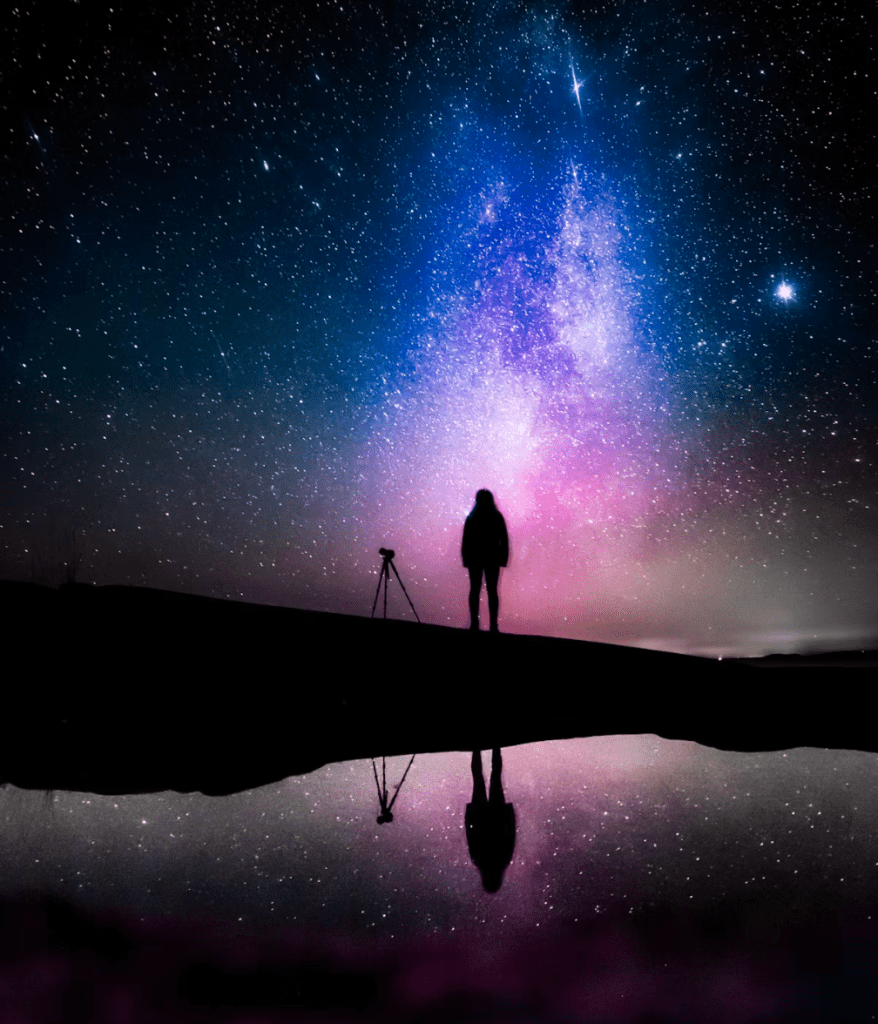
My Takeaway
I love science. I love learning how things work. I love discovering how enormous the universe is and how unbelievably small we are within it. And strangely… That doesn’t make God seem smaller to me.
It makes me stand in greater awe. The more we discover, the more questions seem to appear. We discover galaxies…
and then wonder how the universe began. We discover DNA… And then ask how life arose. We discover the laws of physics… and then wonder why those laws exist.
Science keeps answering extraordinary questions. And I hope it never stops.
Christians should be among the people cheering when it does. Because I don’t believe science is slowly pushing God out of His universe. I believe we’re slowly discovering more about the universe He made.
David looked at the night sky thousands of years before telescopes revealed what we can see today and wrote:
“When I look at your heavens, the work of your fingers, the moon and the stars, which you have set in place, what is man that you are mindful of him?” (Psalm 8:3–4)
Thousands of years later… we’ve seen farther into those heavens than David could possibly have imagined. And somehow his question feels even bigger.
Questions to Reflect On
– Have you ever assumed that accepting science requires rejecting belief in God? Why?
– What do you think science is capable of answering, and where might its methods have limits?
– If the universe is capable of supporting complex life, do you think that requires an explanation?
– Does understanding how something works necessarily tell us why it exists?
– If God created the natural world, should Christians ever be afraid of discovering more about it?
– When you look at the universe, what explanation do you think best accounts for its existence?
If you’ve read this entire blog, thank you. Maybe you’re a Christian who has always felt nervous around words like evolution or Big Bang. Maybe you’re a skeptic who assumed Christianity requires rejecting modern science. Or maybe you’re somewhere in between.
My hope isn’t that I’ve settled every scientific or theological debate. I definitely haven’t. 😂
My hope is simply that we’ve dismantled one false choice: You don’t have to choose between asking scientific questions and asking questions about God.
Science asks us to look closely at the universe. Christianity gives me every reason to look.
Study it.
Question it.
Explore it.
Discover things Christians haven’t figured out yet.
If our faith is true, we don’t need to fear what honest investigation will uncover. Because the Christian claim isn’t that God lives in the shrinking spaces science hasn’t explained yet.
It’s that every galaxy science observes… Every law it discovers… Every atom it studies… Every living thing it investigates… Exists within a reality that ultimately owes its existence to Him.
Science can show us extraordinary things about the heavens. And Christianity invites us to ask whether those heavens are telling us something about the One who made them.
“Great are the works of the Lord, studied by all who delight in them.” (Psalm 111:2)
So keep studying.
Keep discovering.
Keep asking questions.
And keep looking up.
~~*~~
Father,
Thank You for creating a universe filled with beauty, order, mystery, and wonder. Thank You for giving us minds capable of studying the world around us and for the men and women who devote their lives to discovering more about Your creation. Keep us from being afraid of truth.
Where we’ve misunderstood Scripture, give us humility to study more carefully. Where we’ve misunderstood science, give us humility to listen and learn. And where questions remain unanswered, keep us from pretending to know more than we do.
Give wisdom to scientists, doctors, researchers, teachers, and students as they explore the world You made. May every new discovery deepen our wonder rather than our pride. And when we look through microscopes at things too small for our eyes to see… or through telescopes at galaxies almost beyond our comprehension… remind us that You are greater still.
Most of all, keep our eyes on Jesus, through whom all things were made and in whom all things hold together. May everything we learn lead us toward truth. And may everything we do point others toward You.
In Jesus’ precious name,
Amen.
Questions Worth Asking Series
Next Question: If God Knows Everything, Do We Really Have Free Will?
If God already knows every choice we’ll ever make, are our choices actually free? Could we ever choose differently? And if God knew humanity would sin before He created us, why create us at all?
We’ll wrestle with God’s foreknowledge, human responsibility, and whether being known by God means our lives have already been predetermined.
Come back next Saturday!

